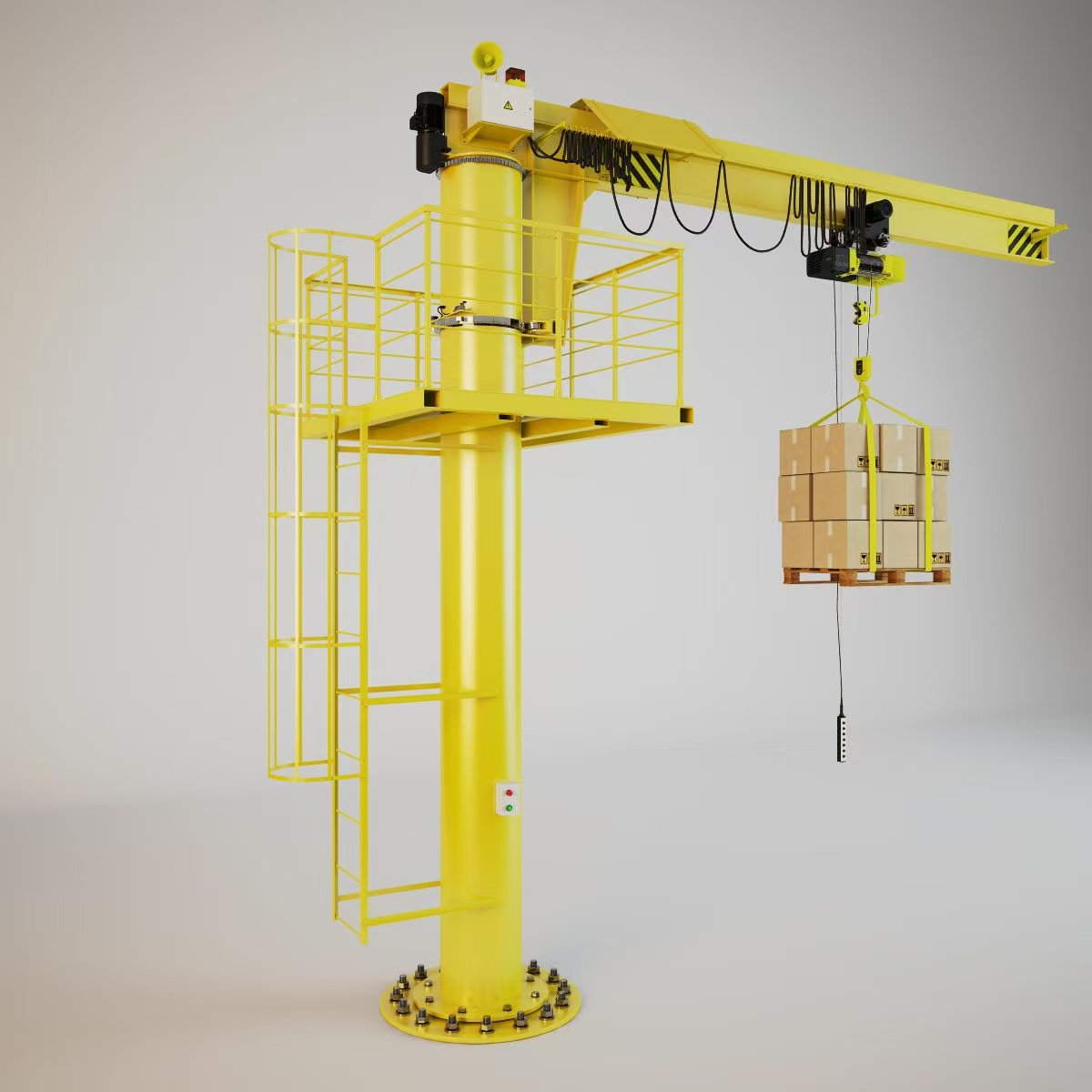
In industrial production, warehousing, and construction, jib cranes are indispensable for flexible, short-distance lifting tasks. Choosing the right one requires careful consideration of key factors to ensure safety, efficiency, and long-term usability. This article outlines the essential steps to select the perfect jib crane for your needs.
1. Define Your Core Lifting Requirements
The first critical step is to clarify your lifting needs, focusing on three key parameters:
1.1 Load Capacity
Select a crane with a rated capacity that slightly exceeds your heaviest load (10-20% margin) to avoid overloading risks. Jib cranes typically range from 250 pounds to 15 tons, with custom options for heavier tasks.
1.2 Working Radius and Boom Length
Measure your workspace to determine the required reach, accounting for obstacles. A longer boom offers more coverage but needs greater stability; most have a 3-10 meter radius, with adjustable options available.
1.3 Lifting Height and Clearance
Calculate the vertical lifting height needed, considering workspace height, load size, and overhead obstacles. Adequate clearance prevents collisions and ensures smooth operation.
2. Select the Right Type of Jib Crane
Jib cranes are categorized by mounting method, each suited to specific spaces and tasks:
2.1 Free-Standing Jib Cranes
Anchored to a concrete foundation, they offer 360° rotation and high rigidity, ideal for large workshops or outdoor areas. They require floor space and a strong foundation, with higher initial costs.
2.2 Wall-Mounted Jib Cranes
Attached to building walls/columns, they save space and suit small workshops. Offering 180-270° rotation for light-medium loads, they require a strong supporting structure.
2.3 Cantilever Jib Cranes
Mounted on mezzanines or columns, they extend to hard-to-reach areas, perfect for space-constrained warehouses and light-duty tasks.
2.4 Articulating Jib Cranes
With a two-section bending boom, they navigate obstacles easily, ideal for tight spaces, assembly lines, and precise short-distance lifting.
3. Consider the Working Environment
Your workspace conditions determine the crane’s durability:
3.1 Indoor vs. Outdoor Use
Indoor cranes use standard materials; outdoor models need corrosion-resistant steel and wind load resistance to withstand weather.
3.2 Environmental Conditions
High temperatures, dust, or explosives require specialized cranes (e.g., heat-resistant components, explosion-proof systems) and regular maintenance.
3.3 Power and Control Options
Manual cranes suit light, infrequent use; electric cranes are efficient for heavy/high-frequency tasks; pneumatic cranes work where electricity is hazardous.
4. Prioritize Safety and Compliance
Safety is non-negotiable—ensure the crane meets standards (ISO 4301-4, ISO 12480-4, local regulations) and has key features (load limiters, emergency stops, anti-collision devices). Choose easy-to-install models with accessible maintenance and after-sales service.
5. Evaluate Cost and Long-Term Value
Look beyond upfront costs—consider durability, maintenance expenses, and scalability. A high-quality crane reduces downtime and adapts to future needs.
Conclusion
Choosing the right jib crane involves balancing lifting requirements, workspace conditions, safety, and budget. By following these steps, you can select a crane that boosts efficiency, ensures safety, and delivers long-term value as an investment in your operations.