A crane workshop is a facility designed for the manufacturing, assembly, maintenance, or repair of cranes and other heavy lifting equipment. Because these operations involve large steel structures, motors, gearboxes, hoists, and mechanical components, the workshop itself needs suitable material handling equipment.
In many crane workshops, an overhead crane is one of the most important pieces of equipment. It allows heavy components to be moved between workstations without relying entirely on forklifts or mobile equipment.
A crane workshop can be used for different stages of crane production and service, including:
Steel plate and structural component processing
Welding and fabrication
Crane girder assembly
Hoist and trolley assembly
Electrical installation
Painting and surface treatment
Crane testing and inspection
Maintenance and repair
The layout depends on the type and size of cranes being manufactured or serviced.
A workshop producing large double-girder cranes will generally require more lifting capacity and working space than a facility handling small lifting equipment.
Heavy crane components can weigh several tons and may need to be moved repeatedly during production.
An overhead crane for a crane workshop can be used to:
Move steel plates and structural parts
Position crane girders during assembly
Install hoists and electrical equipment
Load finished crane components
Move motors and gearboxes
Support maintenance and repair work
The crane can cover multiple workstations while keeping the workshop floor available for production activities.
A single girder overhead crane is suitable for many general manufacturing and material handling applications.
It can be used for moving lighter crane components, machinery parts, steel materials, and finished products.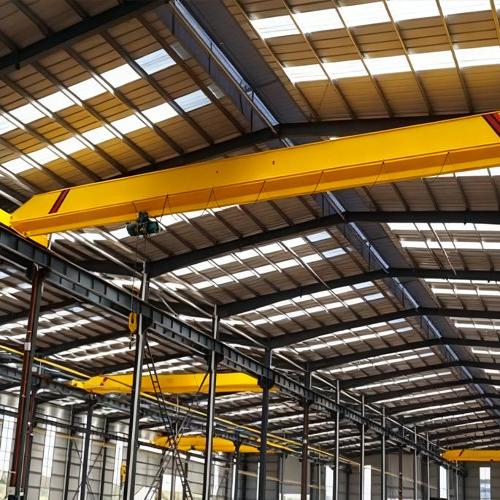
Double girder cranes are often selected when the workshop handles heavier loads or requires a larger span and lifting height.
They are commonly used for heavy structural assembly, large crane components, and machinery handling.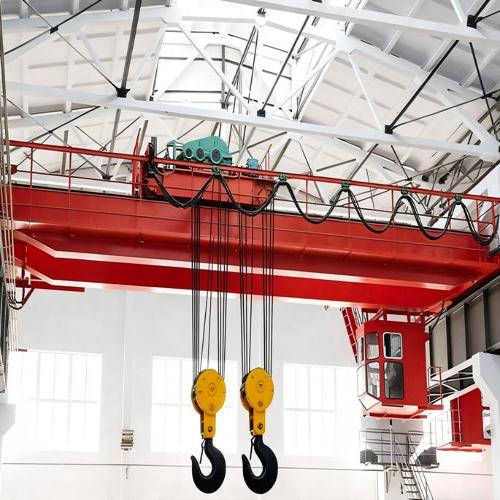
European-type cranes use compact structural and drive arrangements. They can be useful where headroom is limited or where the workshop requires efficient use of available space..png)
Jib cranes can complement the main overhead crane at individual workstations.
For example, a jib crane may be installed near a welding station or assembly area for handling smaller components.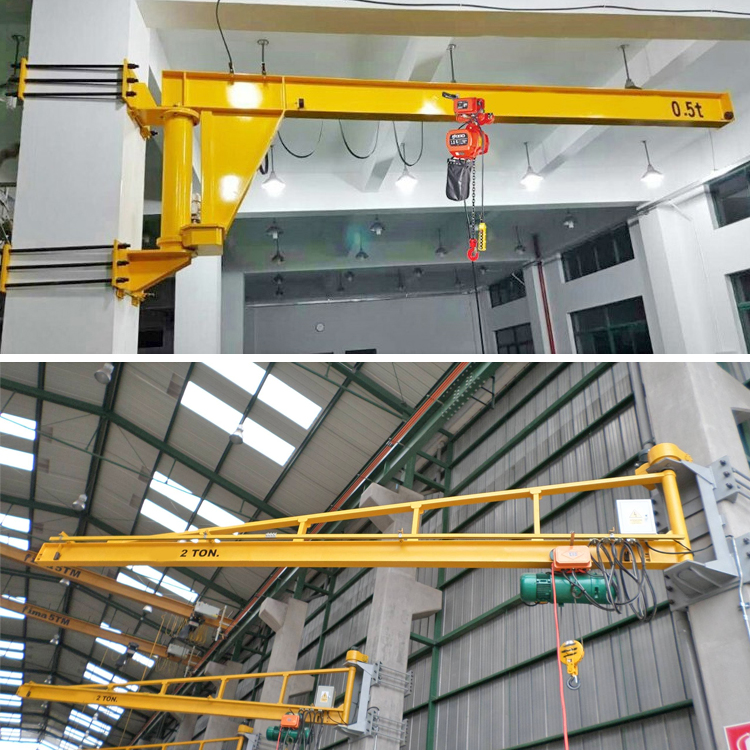
A good workshop layout should follow the actual production process rather than simply placing equipment wherever space is available.
A typical crane manufacturing workshop may include:
Raw Material Area → Cutting and Processing → Welding → Assembly → Electrical Installation → Testing → Finished Product Area
The overhead crane should be able to reach the areas where heavy materials are regularly handled.
When planning the layout, consider:
Crane span
Runway length
Hook height
Column positions
Workshop width
Production line arrangement
Truck access
Storage areas
Maintenance space
Adequate clearance should also be maintained between the crane, building structure, stored materials, and production equipment.
The lifting capacity is only one part of the selection process.
Determine the heaviest component that needs to be lifted during normal production.
The hook should reach the required working height while maintaining sufficient clearance from the roof and other equipment.
The crane span should cover the required production area without creating unnecessary structural cost.
The runway length should match the actual material flow through the workshop.
A crane used throughout every production shift needs a different duty specification from one used only occasionally.
Pendant control, radio remote control, or cabin operation can be selected according to workshop size and visibility requirements.
Heavy fabrication and assembly work requires clear separation between lifting operations and personnel movement.
Basic safety measures include:
Do not exceed the crane's rated capacity.
Inspect hooks, wire ropes, brakes, and limit switches.
Use lifting accessories suitable for the load.
Keep personnel away from suspended loads.
Maintain clear crane travel paths.
Avoid storing materials beneath suspended loads.
Carry out regular inspection and maintenance.
The workshop should also have clear procedures for lifting large crane girders and other long components, as these loads can require careful control during positioning.
The workshop crane itself should be included in the facility's maintenance program.
Regular checks can include:
Hoist and lifting mechanism
Wire rope or chain
Hook and hook block
Traveling wheels
End carriages
Motors and gearboxes
Brakes
Limit switches
Electrical connections
Runway rails
The inspection frequency should reflect the crane's working conditions and operating frequency.
Besides overhead cranes, a crane manufacturing or repair workshop may require equipment such as:
Welding machines
Plate cutting machines
Drilling machines
CNC processing equipment
Hydraulic equipment
Assembly tools
Painting equipment
Testing equipment
The lifting system should be planned together with these machines so that heavy components can move smoothly between production stages.
HY Crane provides lifting equipment for manufacturing plants, crane workshops, machinery factories, warehouses, and other industrial facilities.
Depending on the workshop requirements, solutions can include single-girder overhead cranes, double-girder overhead cranes, European-type cranes, gantry cranes, jib cranes, and electric hoists.
For a new crane workshop, the recommended configuration should be based on the maximum load, workshop dimensions, lifting height, runway length, production process, and working frequency.
A well-planned crane workshop needs more than enough floor space for fabrication and assembly. Material flow, lifting capacity, crane coverage, hook height, and safety should all be considered during the workshop design.
An overhead crane can become a central part of the production process, helping move heavy components from raw material handling through assembly, testing, and finished product storage.
By matching the crane system to the workshop layout and actual production requirements, manufacturers can create a more practical and reliable material handling process.
What type of crane is commonly used in a crane workshop?
Overhead cranes are commonly used because they can cover large indoor working areas without occupying much floor space.
What crane capacity is needed for a crane workshop?
It depends on the heaviest component handled during production. The working frequency and lifting accessories should also be considered.
Can a crane workshop use both overhead and jib cranes?
Yes. An overhead crane can provide general material handling coverage, while jib cranes can serve individual workstations.
What information is needed to design a workshop crane?
Important information includes lifting capacity, span, lifting height, runway length, workshop dimensions, working frequency, load type, and power supply.